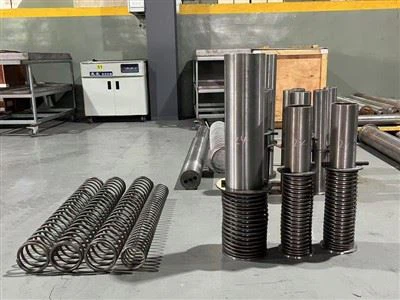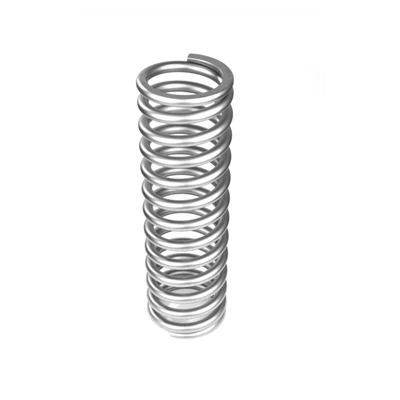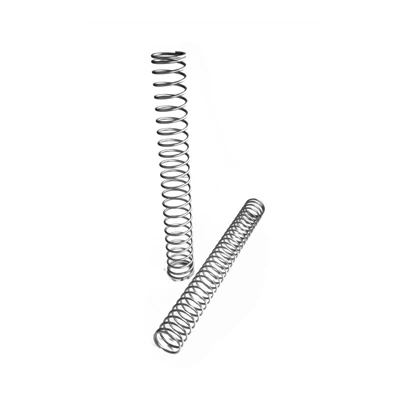
The spring is an elastic element widely used in the mechanical and electronic industries. The spring can produce a large elastic deformation when it is loaded, and convert the mechanical work or kinetic energy into deformation energy. After unloading, the deformation of the spring disappears and returns to its original state. Deformation energy is converted into mechanical work or kinetic energy.
1. Measurement function
We know that within the elastic limit, the extension (or contraction) of the spring is proportional to the external force. A spring balance is made using the property of a spring.
2. Press function
Observing various electrical switches, you will find that one of the two contacts of the switch must be equipped with a spring to ensure that the two contacts are in close contact and are well connected. If the contact is poor, the resistance at the contact will increase, and the heat generated when the current passes through will increase. In severe cases, the metal at the contact will melt. The two metal columns of the bayonet lamp holder are equipped with springs for good contact; as for the central metal sheet of the screw base and the socket metal sheets of all sockets are reeds, their function is to make the two sides in close contact to keep the Same as good. In the cassette tape, there is a phosphor bronze reed, which uses the elastic force generated when it is bent and deformed to make the magnetic head in close contact with the tape. There is a long coil spring in the stapler. Its function is to hold the staples tightly, and on the other hand, when the front staple is pushed out, the back staple can be sent to the front to prepare the staple to be pushed out comfortably. In this way, the nails can be automatically pushed to the front until all the nails are pushed out. Many machines are self-feeding, and the automatic loading of bullets in automatic rifles relies on this function of the spring. In addition, clips such as clothes clips, ballpoint pens, and pen sleeves are clipped to clothes by the pressing function of springs.
3. Reset function
The spring is deformed under the action of external force, and the spring can return to its state after the external force is removed. Many tools and equipment use this property of springs to reset. For example, many building doors have return springs on the hinges that automatically reset when people enter or exit. People also use this function to make automatic umbrellas, automatic pencils and other supplies, which are very convenient. In addition, various buttons and keys are also indispensable for the return spring.
4. Driving function
Mechanical clocks, clockwork toys are driven by winding up the clockwork. When the spring is wound up, the spring is bent and deformed, storing a certain amount of elastic potential energy. After the release, the elastic potential energy is converted into kinetic energy, which is driven to rotate by the transmission device. One of the properties of springs is also used in toy guns and starting guns and military firearms.
5. Buffer function
A spring is installed between the locomotive frame and the wheel, and the elasticity of the spring is used to slow down the bumps of the vehicle.
6. Voice function
When the air flows from the reed hole in the harmonica and accordion, it impacts the reed, and the reed vibrates to make a sound.