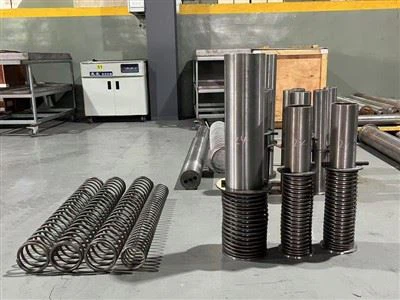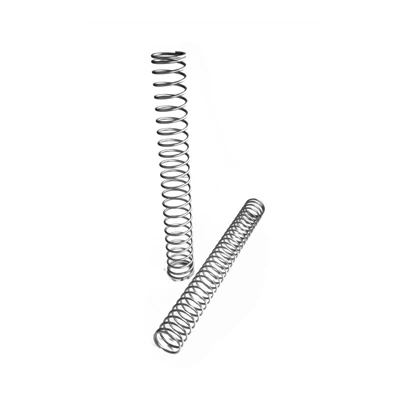
The manufacturing of high-temperature springs usually starts with the winding of wires. According to the wire diameter and material characteristics, two methods can be selected: cold rolling or hot rolling.
For materials with finer wire diameter and better plasticity, such as austenitic stainless steel or precipitation hardening steel with a diameter of less than 10mm, cold rolling process is generally used. Cold rolling is carried out on a spring machine, and the pitch and diameter of the spring are controlled by adjusting the feeding roller and variable diameter mechanism. After cold rolling, there will be significant residual processing stress inside the spring, especially for materials with strong work hardening tendency. It is necessary to conduct stress relief annealing in a timely manner to prevent deformation during placement or use.
For high-temperature alloys with thicker wire diameters or difficult to cold roll, such as Inconel 718 or large section springs, hot rolling technology is often used. Heat the wire to a certain temperature (usually 900-1100 ℃) to increase its plasticity, and then shape it on a dedicated coiling machine. During hot rolling, it is necessary to control the uniformity of heating temperature to avoid local overheating that may cause coarse grains. After winding, the spring needs to be slowly cooled in a controlled atmosphere or immediately subjected to solution treatment.
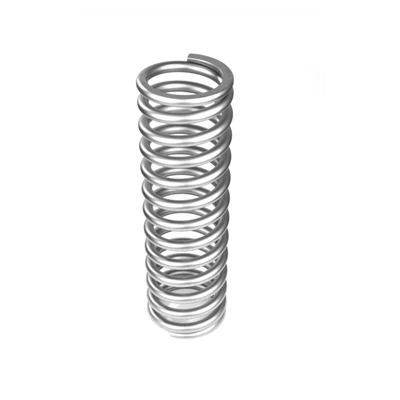
End processing is also an important step in forming. Whether it is the compression ring or the polished end face, it is necessary to ensure that the supporting surface is flat and perpendicular to the spring axis. For high-temperature applications, the end structure should avoid sharp corners as much as possible to reduce stress concentration. Surface microcracks or scratches generated during the winding process can be the source of high-temperature fatigue, so it is necessary to maintain the smoothness of the tooling during operation and add surface inspection procedures if necessary.