In 2026, following a period of explosive growth, the new energy vehicle industry is shifting comprehensively from "electrification" to "intelligence + low-carbon development", reshaping the global automotive landscape and technological paradigm. Correspondingly, the requirements for supporting basic components are becoming increasingly demanding.
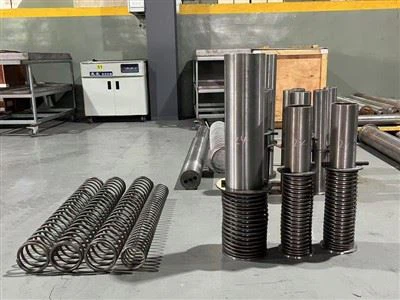
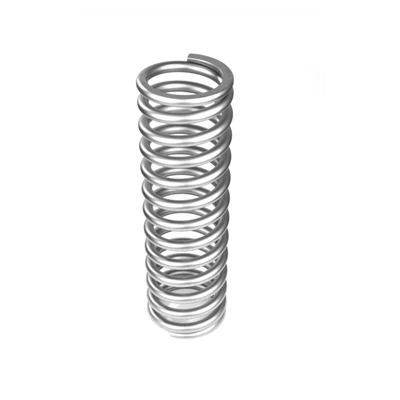
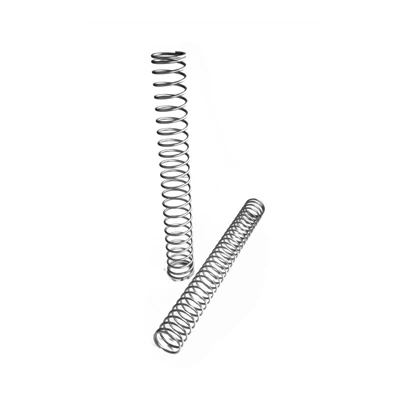
This article focuses on our cooling system springs.
As elastic compression, sealing and reset components in NEV thermal management systems, their core function is to ensure tight fitting of cooling components such as cold plates, flow channels and valves, delivering minimal interface thermal resistance, reliable sealing and stable motion reset. They are particularly suitable for sealing applications in battery liquid cooling plates, expansion valves, shut-off valves and heat exchangers.

In the cooling system of new energy vehicles, the role of springs is multi-functional.Rather than merely serving as simple elastic components in the traditional sense, they undertake multiple important tasks including shock absorption and protection, sealing assurance, intelligent temperature control, and safety protection.In this way, they provide critical support for the precise and efficient operation of the thermal management system.
🛡️ Core Functions of Cooling System Springs: Protection and Fixation
During bumpy driving, maintaining the stability of the cooling system - especially the battery cooling circuit - is essential.Springs act primarily as protectors and fasteners:
- Buffer and shock absorption for pipelines and batteriesUsing the elasticity of springs, road impacts and vehicle vibrations are absorbed, preventing loosening or fatigue fracture of cooling pipeline connections.Meanwhile, this protects battery modules from performance degradation or internal damage caused by prolonged vibration.
- Maintain pressure and ensure reliable sealingAt cooling system pipeline joints, springs continuously provide stable preload.Even under vehicle vibration or thermal expansion and contraction, they keep components tightly sealed to avoid coolant leakage and ensure long-term stable system operation.

🔧 Advanced Functions: Intelligence and Active Safety
Beyond physical protection, modern NEVs adopt springs manufactured from special materials,endowing the cooling system with intelligent and active safety capabilities.
- Temperature-triggered intelligent managementSome designs apply shape-memory alloy springs.These springs deform automatically at specific temperatures, acting like an intelligent switch:
- Warning: Trigger a low-current warning circuit when battery temperature becomes excessively high.
- Protection: Actively cut off the main battery circuit when temperature reaches a dangerous threshold to prevent thermal runaway.
- Active safety power-offIn cases of severe battery overload or short circuit, instantaneous high current causes the shape-memory spring to deform rapidly due to heat.It quickly disconnects the circuit like a fuse, preventing serious accidents such as fire.
🔩 Typical Applications of Cooling System Springs
- Heat sink or battery pack shock mount: Springs installed between the base and heat sink or battery pack to absorb impacts.
- Liquid cooling plate support: Arc-shaped springs press the liquid cooling plate firmly against the battery bottom to ensure efficient heat exchange.
- Refrigeration pipeline connections: Spring structures provide flexible connections for rigid pipelines and dampen vibration.
- Pipeline clamps: High-performance clamps with built-in springs maintain continuous clamping force to resist vibration.

Summary of Cooling System Springs for New Energy Vehicles:
High-temperature resistant and high-durability springs are the cornerstone of thermal management systems in new energy vehicles (NEVs) and industrial heat dissipation fields. Through material innovations (such as ceramic springs) and process breakthroughs (such as micrometer-level precision), they not only address physical support challenges in harsh environments characterized by high temperature, high pressure, and high vibration, but also directly underpin the core competitiveness of NEVs in terms of long driving range, high safety, and lightweight design.